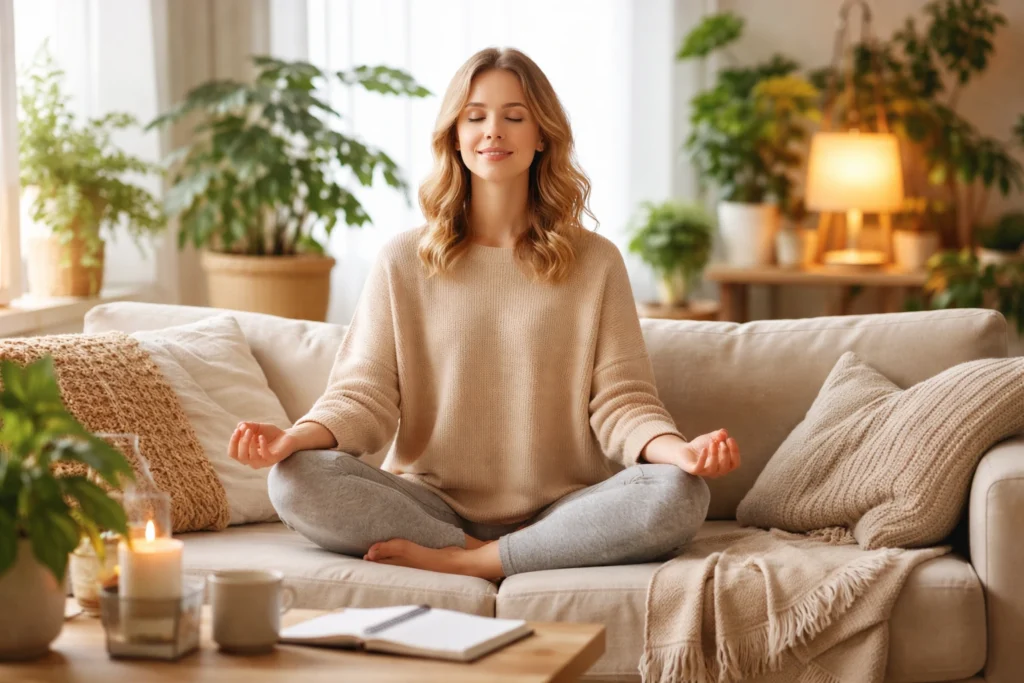
Mental health isn’t just about getting through tough days—it’s about building steady support for your mind so everyday life feels more manageable. Many people in the USA are juggling work, family responsibilities, financial pressure, and constant notifications, all of which can quietly drain energy over time. The good news is that calmer days often come from small habits repeated consistently, not dramatic changes.
In this guide, you’ll find practical mental health tips you can start using right away. We’ll cover how to improve mental health naturally, what a simple mental health self-care routine can look like, and which daily habits support mental wellness. You’ll also learn easy stress management techniques, simple mindfulness exercises for beginners, and ways to reduce stress and anxiety at home. None of this requires perfection—just a willingness to start small and stay steady.
How to Improve Mental Health Naturally With Everyday
When people ask how to improve mental health naturally, the answer usually begins with the basics: sleep, food, movement, and sunlight. These aren’t “quick fixes,” but they create the conditions your mind needs to stay more balanced. A consistent sleep schedule helps regulate mood and improve focus. Regular meals with protein and fiber can reduce energy crashes that often feel like irritability or brain fog. Gentle movement supports stress relief and improves sleep quality, even if it’s only a short walk.
Try building a few simple supports into your day rather than trying to change everything at once. Start with one habit, then add another when it feels normal. Over time, these foundations help you feel more emotionally steady and better able to handle stress without feeling overwhelmed.
Helpful ideas to start:
- Go to bed and wake up within the same 60–90 minute window daily
- Take a 10–20 minute walk outside, preferably in daylight
- Drink water early in the day and limit late-night caffeine
- Eat balanced meals (protein + fiber + healthy fats)
- Reduce doom-scrolling by setting app time limits
Mental Health Self-Care Routine That Actually Feels Realistic
A mental health self-care routine doesn’t have to look perfect or take hours. In fact, routines that are too complicated usually don’t last. The goal is to create a few simple actions that bring your nervous system down from “high alert” and help your mind feel more settled. Think of self-care as maintenance, like brushing your teeth—small steps done consistently.
Start by choosing a morning and evening “anchor.” A morning anchor might be a short stretch, a glass of water, or five minutes without your phone. An evening anchor might be dimming lights, journaling a few lines, or reading a page or two of a book. These cues tell your brain it’s safe to shift gears.
If you feel like you’re always “on,” add a short reset in the middle of the day. Even two minutes of quiet breathing can help reduce tension.
Simple self-care routine ideas:
- Morning: water + sunlight + 3 deep breaths
- Midday: 5-minute walk or step outside
- Evening: screen-free 20 minutes before bed
- Write down 1 worry and 1 next step (keeps thoughts organized)
- Do one calming task (shower, tea, tidy a small area)
Signs of Stress and Poor Mental Health to Watch For
Stress is normal, but when it becomes constant, it can start to affect your mood, focus, and relationships. Learning the signs of stress and poor mental health can help you act early—before burnout hits. Many people ignore early signals because they seem “not serious enough,” but small warnings matter. You don’t need to wait for a breaking point to make changes or ask for support.
Stress often shows up in the body first: headaches, muscle tension, stomach discomfort, and tiredness even after sleep. Emotionally, you may feel more irritable, numb, or overwhelmed by small tasks. Mentally, concentration becomes harder, and you might replay worries repeatedly.
If these symptoms last for weeks or if they interfere with work, sleep, or relationships, it may be time to speak with a professional. Support can make a big difference.
Common signs to notice:
- Trouble sleeping or waking up exhausted
- Feeling easily irritated or emotionally “flat.”
- Losing interest in things you usually enjoy
- Constant worry, racing thoughts, or overthinking
- Withdrawing from friends or avoiding responsibilities
- Feeling overwhelmed by simple decisions
- Physical tension (tight jaw, shoulders, stomach issues)
Mental Health and Stress Management Techniques That Work in Real Life
Mental health and stress management techniques are most helpful when they’re easy enough to use on a normal day. You don’t need a perfect schedule—just a few tools you can reach for when stress rises. One of the most effective approaches is to reduce stress at the source where possible (boundaries) and calm your nervous system in the moment (regulation).
Start by identifying what drains you most: lack of sleep, too many commitments, constant phone use, or unresolved conflicts. Then choose one small boundary you can set. That might be not answering work messages after a certain time, saying “no” to one extra task, or taking social media breaks.
Pair boundaries with quick calming skills. These techniques help your body shift out of “fight-or-flight” and into a steadier state.
Practical techniques to try:
- Box breathing (4 seconds in, hold, out, hold) for 2–3 minutes
- A quick “brain dump” list to reduce mental clutter
- Set a timer for focused work (25 minutes), then take a break
- Limit caffeine if it increases anxiety or restlessness
- Create a short end-of-day routine to separate work from home
- Talk to someone you trust instead of holding everything inside
Daily Habits That Support Mental Wellness at Home

The most reliable mental health tips often come down to daily habits that support mental wellness—especially at home, where your environment can either calm you or keep you tense. A “wellness routine” doesn’t mean strict rules. It means creating a life that supports your mental state more often than it drains it.
Start with your space. A clean, comfortable area doesn’t need to be perfect—it just needs to feel safe and manageable. Small changes like opening a window, keeping one area tidy, or setting a relaxing evening atmosphere can reduce stress more than people realize.
This is also where ways to reduce stress and anxiety at home become powerful. Build tiny “calm cues” into your day: lower lighting at night, soothing music, stretching, warm showers, or quiet time without screens.
Daily habits to build a calmer home routine:
- Simple mindfulness exercises for beginners (60 seconds of breathing)
- Keep a consistent bedtime and reduce late scrolling
- Move your body daily (walk, light workout, stretching)
- Add one calming habit after dinner (tea, reading, gentle music)
- Create a “worry window” (write worries down, then close the notebook)
- Practice gratitude with 1–2 specific things daily
- Plan tomorrow in 3 bullets to reduce nighttime overthinking
Conclusion
A calmer mind doesn’t come from doing everything at once. It comes from small, steady choices—sleep, movement, simple routines, and tools that help your body feel safe when stress rises. If you want to build a stronger foundation, start with one habit today and stick with it for a week. Then add the next. Over time, you’ll create a lifestyle that supports your mental well-being naturally.
Quick recap to start today:
- Choose one self-care anchor (morning or evening)
- Practice one calming technique (2 minutes of breathing)
- Reduce one stress trigger (notifications, late caffeine, overcommitting)
- Add one daily habit that supports mental wellness (walking, journaling, tidy space)
If stress feels heavy or persistent, consider reaching out to a licensed professional. Getting support is a strong, practical step—not a weakness.
FAQs
1) How can I improve my mental health naturally without feeling overwhelmed?
Start with one small change: consistent sleep, a short walk outside, or five minutes of quiet breathing daily. Small habits are easier to maintain and build momentum.
2) What is a simple mental health self-care routine for beginners?
Try a morning anchor (water + sunlight) and an evening anchor (screen-free time + journaling). Keep it short so it’s realistic.
3) What are common signs of stress and poor mental health?
Ongoing fatigue, irritability, sleep issues, constant worry, loss of interest, and physical tension can be signs. If symptoms last weeks or affect daily life, consider professional support.
4) What are easy ways to reduce stress and anxiety at home?
Use calming cues like lower lighting at night, limit scrolling, keep one space tidy, do a short breathing exercise, and build a consistent bedtime routine.
Read More: Healthcare & Supplement Information at InclineChurch
Stay informed with trusted wellness articles, self-care tips, and supplement information designed for everyday healthy living.