Gut health affects more than just how your stomach feels after a meal. Your digestive system is responsible for breaking down food, absorbing nutrients, supporting your immune system, and even influencing mood through the gut–brain connection. When digestion is working well, you usually notice steady energy, regular bowel habits, and fewer uncomfortable surprises like bloating or heartburn. When it’s not, the signs can show up as gas, constipation, irregular stools, or that “heavy” feeling after eating.
The good news is that improving gut health and digestion doesn’t have to be complicated. Small changes done consistently often make the biggest difference. Below is a practical, everyday approach—focused on food, habits, and smart supplement choices—without hype and without unrealistic promises.
Understand what gut health really means
When people say gut health, they often mean two things:
- How well digestion works (breaking down food, moving it through the intestines, regular bowel movements, minimal bloating)
- The health of your gut lining and microbiome (the community of microbes living in your digestive tract)
A healthy gut microbiome supports digestion and helps your body process fiber into helpful compounds. It also plays a role in immune function. That’s why a “gut-friendly” routine usually includes fiber-rich foods, enough water, and daily habits that reduce stress on the digestive system.
Common signs your gut may need support:
- Frequent bloating, gas, or abdominal discomfort
- Constipation or irregular bowel movements
- Feeling overly full quickly or after normal meals
- Food sensitivities that seem to be increasing
- Upset stomach that comes and goes with stress
If you have severe pain, blood in stool, unexplained weight loss, persistent vomiting, or symptoms that continue for weeks, it’s best to speak with a healthcare professional to rule out underlying conditions.
How to improve gut health naturally (the habits that matter most)
If you’re wondering how to improve gut health naturally, start with these foundations. They’re simple, but they work because they reduce digestive load and support healthier gut bacteria over time.
Eat on a consistent schedule
Your digestive system likes rhythm. Skipping meals and then eating very large portions later can make bloating and reflux worse. Aim for regular meals and avoid eating too late at night if you notice heartburn.
Chew more, eat slower
Digestion begins in the mouth. Eating quickly often means you swallow air and overload the stomach. A small habit that helps: put your fork down between bites and chew thoroughly. Many people notice less bloating within a week.
Move daily (even light movement counts)
Walking supports gut motility—basically, it helps food move along smoothly. A 10–20 minute walk after meals is one of the simplest digestion-friendly habits.
Hydration + fiber (together)
Fiber helps with regularity, but it needs water to do its job. If you increase fiber without drinking enough, constipation can get worse. Add both gradually.
Manage stress (yes, it counts)
Stress can change digestion, appetite, and bowel habits. Try one calming routine daily: short walks, breathing exercises, stretching, journaling, or limiting caffeine after noon.
Foods for gut health and digestion (what to eat more often)
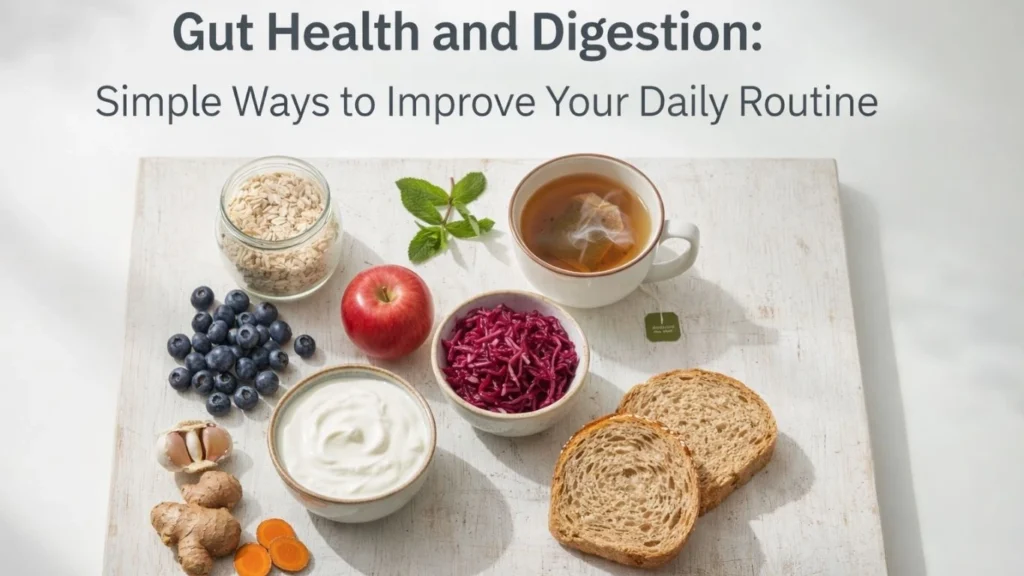
The best foods for gut health and digestion usually share a few qualities: they’re rich in fiber, support good bacteria, and are easy on your stomach when prepared simply.
Fiber-rich whole foods
Fiber feeds beneficial gut bacteria and supports regularity. Great options include:
- Oats, brown rice, quinoa
- Lentils, chickpeas, beans (start small if you’re sensitive)
- Apples, pears, berries
- Leafy greens, carrots, zucchini, sweet potatoes
- Chia seeds and ground flaxseed
Tip: If beans cause gas, soak them well, rinse thoroughly, and start with small portions.
Fermented foods (natural probiotics)
Fermented foods can introduce beneficial microbes:
- Yogurt with live cultures
- Kefir
- Sauerkraut, kimchi
- Miso, tempeh
Start slow if you’re not used to them. A few spoonfuls daily can be enough.
Prebiotic foods (food for good bacteria)
Prebiotics are fibers that feed the good microbes. Examples:
- Garlic, onions, leeks
- Bananas (especially slightly green)
- Asparagus
- Oats
- Cooked-and-cooled potatoes or rice (creates resistant starch)
Easy-on-the-gut choices when digestion is sensitive
If you’re bloated or recovering from a stomach upset, try:
- Soups and broths
- Cooked vegetables instead of raw salads
- Rice, oatmeal, bananas
- Lean protein and simple seasonings
Avoid going extreme. Most people do better with “more of the basics” rather than strict restriction.
Probiotics vs prebiotics for digestion (what’s the difference?)

This is one of the most searched topics for a reason: probiotics vs prebiotics for digestion can be confusing.
Probiotics
Probiotics are live microorganisms (often bacteria) that may help support gut balance. You can get them from fermented foods or supplements.
Prebiotics
Prebiotics are types of fiber that feed beneficial bacteria already living in your gut. Think of them as “fertilizer” for your microbiome.
Which one should you focus on?
For many people, prebiotics and fiber-rich foods are the best starting point because they support long-term microbiome health. Probiotics may be helpful in specific situations (for example, after antibiotics or for certain digestive issues), but results vary.
A practical approach:
- Start with prebiotic foods + steady fiber
- Add fermented foods if tolerated
- Consider probiotics if you still struggle, especially for recurring issues
Digestive enzymes benefits (and when they’re useful)
People often search for digestive enzymes benefits when they feel heavy after meals or notice bloating after certain foods. Digestive enzymes help break down macronutrients like fats, proteins, and carbohydrates. Your body makes enzymes naturally, but some people feel better using supplemental enzymes—especially when they eat larger meals, high-fat meals, or foods that are harder to digest.
Possible benefits people report
- Less “full” feeling after eating
- Reduced bloating after specific meals
- Better comfort when diet changes occur
When digestive enzymes may help most
- If you feel discomfort after protein-heavy meals
- If you experience gas or bloating with certain foods
- If you’re increasing fiber and your system is adjusting
That said, enzymes aren’t a free pass to ignore diet basics. If your meals are rushed, low in fiber, and high in ultra-processed foods, enzymes may not solve the root problem.

Choosing the best digestive enzyme supplement
If you’re comparing the best digestive enzyme supplement, check:
- Clear ingredient list and dosing instructions
- Transparent brand details and customer support
- Third-party testing claims (if available)
- Avoid exaggerated promises like “cures everything.”
If you have pancreatitis, gallbladder issues, or chronic GI symptoms, talk to a clinician before using enzymes regularly.
Best probiotics for gut health (how to choose without guessing)
“Best probiotics for gut health” isn’t one-size-fits-all, because different strains have different roles. Instead of chasing the highest CFU number or the trendiest brand, use simple selection rules:
What to look for
- Specific strains listed (not just “proprietary blend”)
- Clear storage instructions (some need refrigeration, some don’t)
- Expiration date and shelf stability
- Reasonable CFU range (more isn’t always better)
- A brand with a real support contact and return policy
Match your goal
- For general gut balance, multi-strain formulas are common
- For gas/bloating: some people respond better to targeted strains
- For antibiotic recovery, certain strains are researched more often
Start low and observe
If you’re new to probiotics, begin with a lower dose and track changes for 2–4 weeks. Too much too soon can cause temporary gas in some people.
Buying guide: how to buy probiotics for gut health safely

If you’re ready to buy probiotics for gut health, take a careful approach. Online listings can vary, and quality depends on storage, shipping, and seller practices.
Quick safety checklist:
- Buy from reputable sellers with clear policies
- Confirm the product is within its expiry date
- Read storage requirements (heat can reduce potency)
- Avoid products with vague labeling or unrealistic claims
- Save your order email and invoice for reference
Also, be cautious with “miracle gut reset” marketing. Gut support usually works best with consistency: fiber, hydration, movement, and stress management—plus supplements only if needed.
A simple daily routine for gut health and digestion (easy to follow)
Here’s a realistic routine many people can stick with:
Morning
- Drink a glass of water
- Add fiber: oats, fruit, or chia
- If you drink coffee, notice whether it triggers discomfort
Lunch
- Include a fiber source (vegetables + whole grains/legumes)
- Eat slowly and stop at “comfortably full.”
After meals
- 10–15 minute walk when possible
Evening
- Light dinner if reflux is an issue
- Try fermented foods a few times per week (yogurt/kefir)
- Reduce screen stress and sleep on time
Keep it simple. You don’t need 10 supplements—just steady habits.
Conclusion
Improving gut health and digestion is mostly about consistency. Start with real food: fiber-rich meals, fermented options, and prebiotic foods that help beneficial bacteria thrive. Build supportive habits like hydration, daily movement, and slower eating. Then, if you still need extra help, consider targeted options like probiotics or enzyme—based on your symptoms and goals, not trends.
Focus on what you can repeat daily. A calm routine often does more for digestion than any “quick fix.”
FAQs
1) How long does it take to improve gut health naturally?
Many people notice small changes (less bloating, better regularity) within 1–2 weeks of improving fiber, hydration, and meal timing. Bigger changes to the microbiome can take longer, often 4–8 weeks of consistency.
2) Should I take probiotics every day?
Not always. Some people do well with daily probiotics, while others prefer fermented foods or periodic use. Start slowly and track how you feel for a few weeks before deciding.
3) What’s better: probiotics vs prebiotics for digestion?
Both can help, but prebiotic foods and fiber are often the best foundation because they support your existing beneficial bacteria. Probiotics may help in certain situations, especially after antibiotics or for specific symptoms.
4) Are digestive enzymes safe for everyone?
Many people tolerate enzymes well, but if you have ongoing digestive issues, take medications, or have conditions affecting the pancreas, liver, or gallbladder, it’s best to speak with a healthcare professional first.
Read More: Healthcare & Supplement Information at InclineChurch Stay informed with trusted wellness articles, self-care tips, and supplement information designed for everyday healthy living.